

Why patches show even when the work is good
Texture is a pattern with a scale and a density, and the eye is very good at spotting where a pattern changes. A patch can be dead flat and perfectly coated and still read as a patch because the knockdown flattens slightly differently or the orange peel is a touch finer.
Matching is a separate skill from finishing. Plenty of good hangers are mediocre at it.
Identifying what you have
Knockdown, orange peel, splatter, stomp or slap brush, hand trowel, and smooth are the ones we see most in Northeast Georgia. Age matters too: a texture sprayed in 1994 with the equipment of the day doesn't look like the same nominal texture sprayed today.
We photograph the existing surface up close and in raking light before we quote, because that's what tells us how hard the match will be.
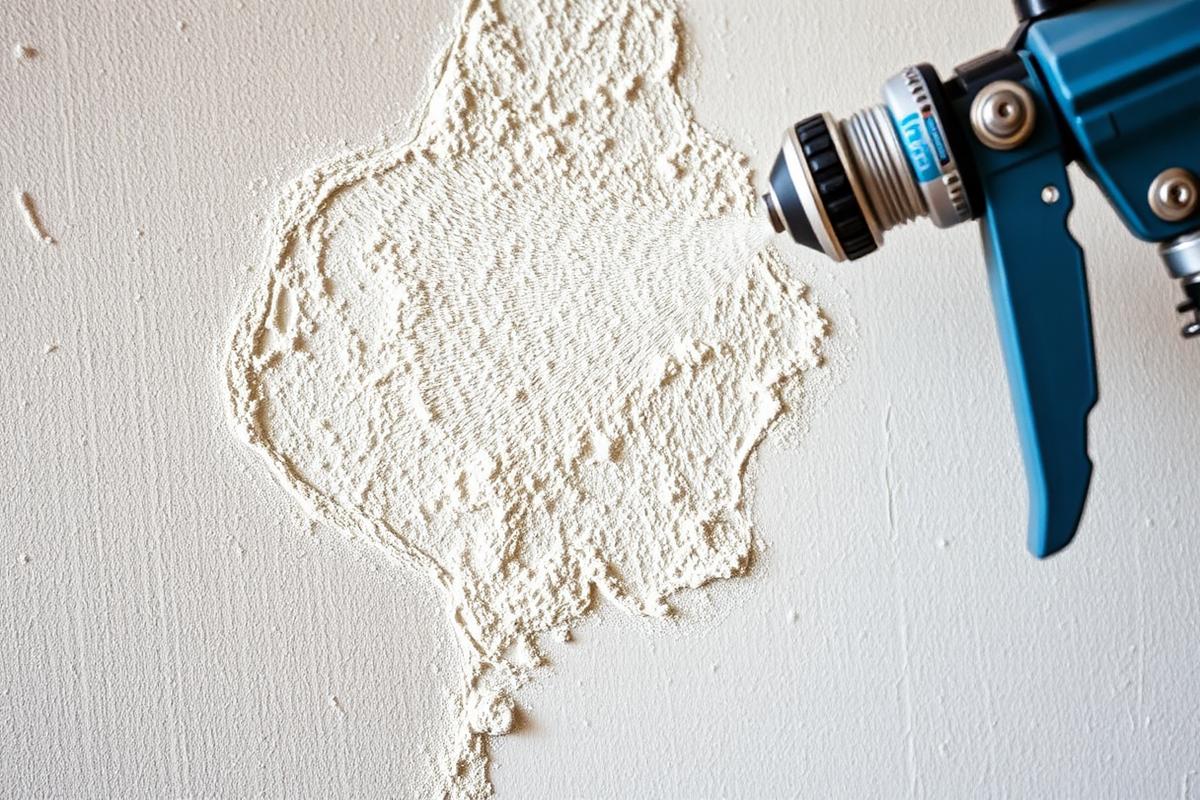
Mud consistency and equipment
The pattern is controlled by how thin the compound is, the nozzle and tip size, air pressure, distance from the wall, and how long you wait before knocking it down. Change any one of those and the pattern changes.
That's why matching is a process of adjusting variables, not a product you buy. Aerosol texture in a can rarely matches anything for long.
The test board
We spray a scrap piece of board, let it set, knock it down, and hold it against your wall before anything gets applied to your ceiling. If it isn't right, we adjust and do it again. It costs a half hour and it's the difference between a repair you can find and one you can't.
When feathering out is the better answer
On a heavily patterned texture, sometimes the right move is to carry the new texture past the patch to a natural break, a corner or a ceiling line, rather than stopping at the repair edge. The eye reads the break instead of the transition.
Paint finishes the illusion
Even a perfect texture match shows if the paint sheen differs. We prime the repair, and on visible walls we'll usually recommend painting corner to corner rather than spot painting.
Related services