
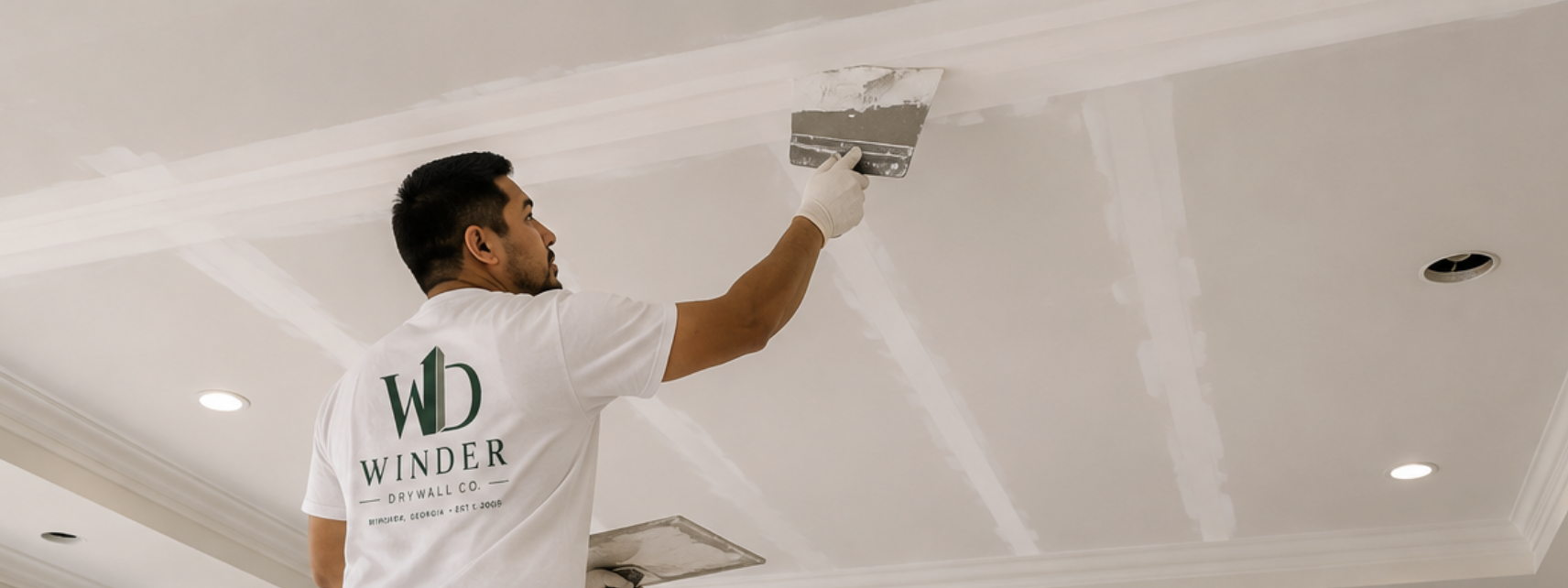
Water damage
The water's gone. Now the room has to look like it never happened.
Burst pipes, roof leaks, overflowing tubs, and basement seepage, water damage is the single most common call we get in Northeast Georgia. We remove what's compromised, confirm the substrate is dry, rebuild, and document the whole thing for your adjuster.
First 48 hours
What to do right now
The order matters. Getting these four things right keeps a small repair from becoming a rebuild.
Stop the water
Shut off the supply or tarp the roof. Nothing else matters until the source is stopped, and we won't close a wall over an active leak.
Move air
Fans and a dehumidifier in the room, doors open. Every hour saturated material sits, more of it has to come out.
Photograph everything
Before anything is moved or torn out. If there's a claim, these photos are the most valuable thing in your file.
Call us
We'll tell you what has to be removed and what can stay, and we'll say so if you don't need us yet.
What we handle
Removal through finish, in one crew
We work alongside your plumber, roofer, or mitigation company, and we pick up where they stop.
- Moisture-compromised drywall and insulation removal
- Moisture verification before anything is closed up
- Stain-blocking primer on affected framing
- Ceiling replacement including light and fan cutouts
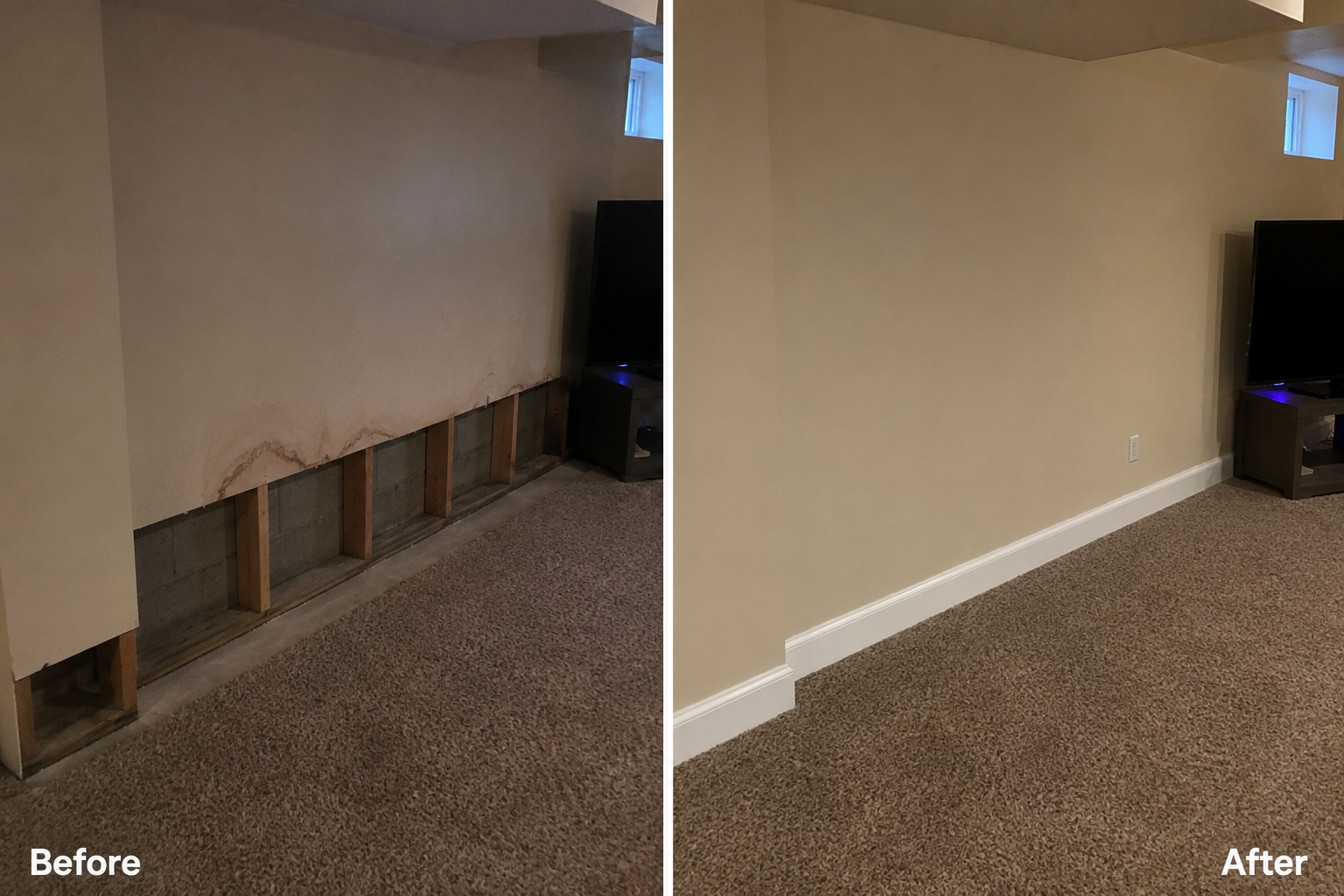
- Basement wall rebuilds after seepage or flooding
- Full texture match so the repair is invisible
- Before, during, and after photo documentation
- Line-item scope written for your adjuster
One thing we won't do
Close a wall over an active leak or wet framing. If the source isn't fixed yet, we'll tell you and come back when it is. It costs you a week and saves you a rebuild.
Working with insurance
We document conditions before demolition, write a scope in language adjusters recognize, and hand you completion photos for your file. If the scope grows once the wall is open, you get supplement documentation in writing, not a surprise invoice.
More on insurance claim workSigns to watch for
How to tell if it's worse than it looks
- A brown ring on the ceiling that keeps coming back after painting
- Stain-blocking primer hides a stain; it doesn't fix an active leak. If it returns, water is still getting in.
- Drywall that feels soft or spongy when you press it
- The gypsum core has lost integrity. That section has to come out. It will not recover as it dries.
- Nail heads or seams suddenly showing on a ceiling
- Moisture has swelled the board and broken the fastener bond. Usually a sign the sheet needs replacing, not patching.
- A musty smell in a room with no visible damage
- Water may be behind the wall or in the insulation. Worth opening a small inspection area before it spreads.
Get water damage help
Attach photos to the email that opens, or text them straight to (770) 637-8007.
Ceiling stained? Wall soft? Call us.
We'll tell you what has to come out before anyone starts cutting.