
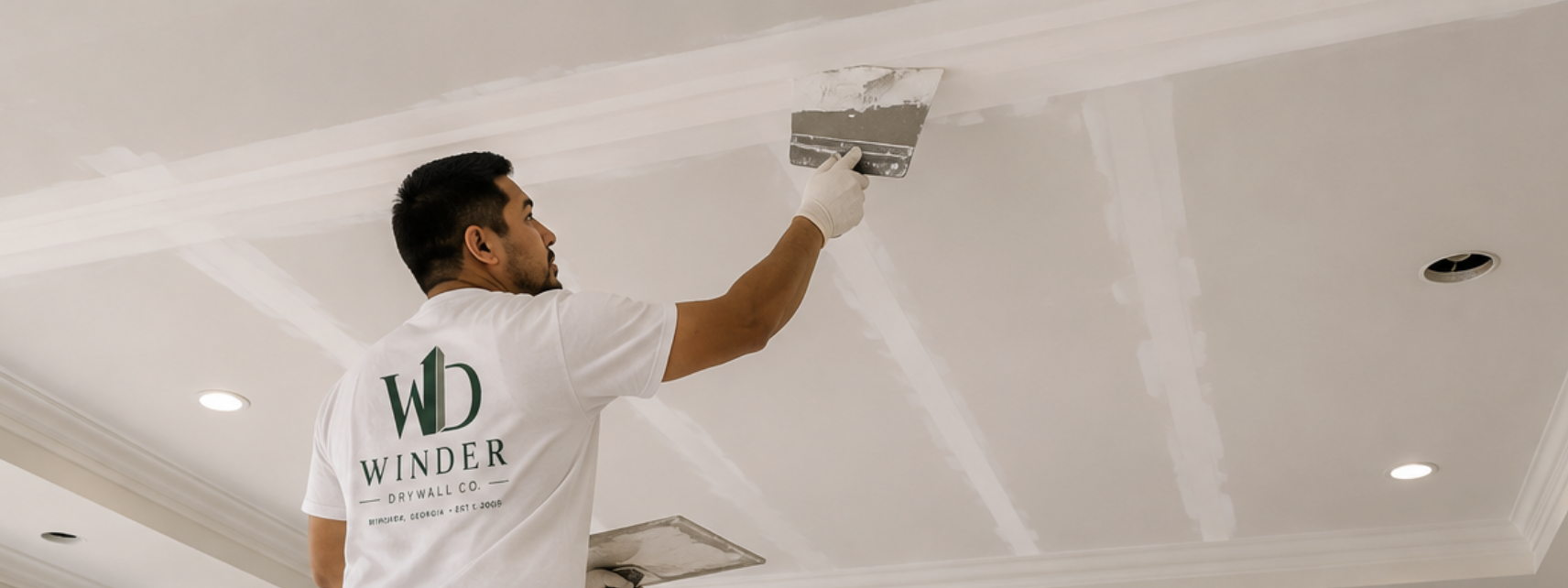
Arrival and walkthrough
We text when we're on the way. First thing on site is a walkthrough with you: confirm the scope, look at anything you noticed since the estimate, and agree on where we'll set up and park.
If there's anything we think you should know before we cut, this is when you'll hear it.
Protecting the space
Floors get covered wall to wall in the work area and along the path in and out. Doorways get sealed with plastic and a zipper. HVAC supply and return vents in the room get covered so the system doesn't carry dust through the house.
Furniture that can't move gets covered. Anything fragile we'd rather you move yourself.
The repair itself
Damaged material gets cut out back to sound board, usually to a clean square. Backing goes in behind the opening so the patch has something to fasten to, then new board is cut to fit and screwed off.
Joints get taped and the first coat goes on. On a repair this is the fastest part of the whole visit, often under an hour.
Drying between coats
Compound needs real time to cure, generally overnight per coat and longer in humid weather. Most repairs take two or three coats, which is why a proper repair is more than one visit.
Nobody speeds this up. Coating over compound that hasn't dried is what causes cracking later.
Sanding and texture
Final sanding is done with vacuum-assisted tools for the bulk of the area and hand work at edges. Then we match your existing texture, testing the spray or trowel pattern on a scrap board first and holding it up to your wall before it touches the ceiling.
Cleanup and handoff
We vacuum, pull the plastic, wipe surfaces, and put the room back. Then we walk it with you in the same light you'll live in and prime the repaired area so it's ready for paint.
If something isn't right, tell us at the walkthrough. That's what it's for.
Related services