
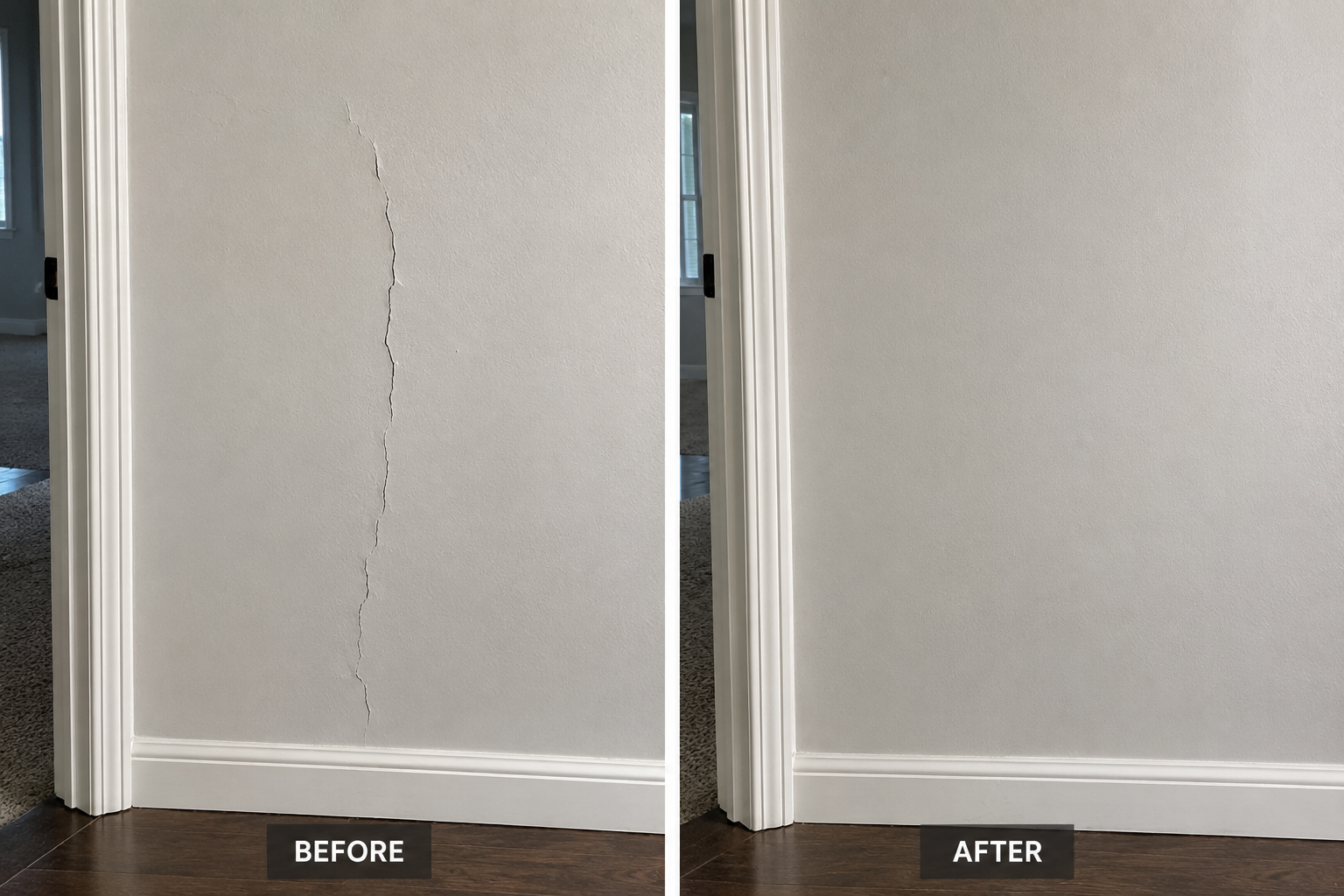
Hairline cracks above doors and windows
These are the most common cracks in Georgia homes, and they're usually harmless. Door and window openings are weak points in a wall, and normal seasonal movement concentrates stress at the corners.
Fix: cut out the crack, re-tape with paper tape, and coat. Simply filling it with caulk or spackle guarantees it comes back.
Long straight cracks along a seam
A crack running perfectly straight for several feet is a failed tape joint. Either the tape was never properly embedded or the framing moved enough to break the bond.
Fix: remove the failed tape entirely, re-tape, and re-coat. Patching over it does not work.
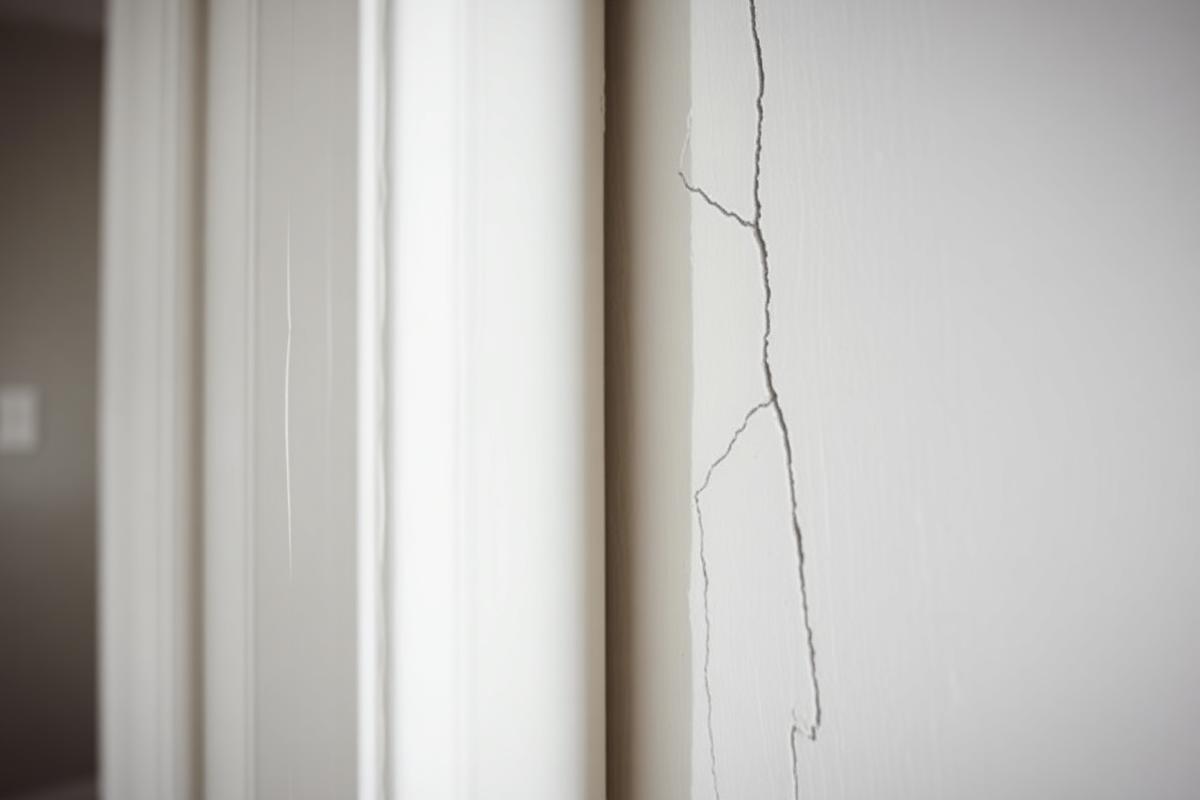
Stair-step or diagonal cracks
Diagonal cracks running from a corner across a wall, especially wide ones, or ones paired with sticking doors and sloping floors, can indicate foundation movement.
Fix: we will repair the drywall, but if we see this pattern we'll tell you to have the foundation evaluated first. Repairing the wall before the movement stops just buys you a repeat.
Cracks with brown staining
Discoloration means water. The crack is a symptom; the leak is the problem.
Fix: find and stop the source, verify the framing is dry, then rebuild. Anyone who offers to just patch and paint over a stained crack is selling you a temporary result.
What causes cracks in the first place
Settling is the one everybody names, and in a house under about five years old it's usually the right answer. Framing lumber gives up moisture, the structure tightens, and the weakest points in the wall telegraph it.
Humidity is the bigger factor in Georgia. Wood framing takes on moisture through a wet summer and gives it back when the heat runs, and that seasonal cycle opens and closes joints a little every year. Cracks that appear each winter and seem to shrink in July are almost always this.
Poor installation shows up as cracks too: joints that were never properly embedded, board butted tight against structure with no relief, screws overdriven through the paper, or a coat applied over compound that hadn't dried. Those crack early and in a straight line.
True structural movement is the least common cause and the easiest to spot, because it doesn't travel alone. Sticking doors, sloped floors, and cracks wider at one end than the other are the tell.
Related services